Friday, December 16, 2011

APOD 2.6-Lunar Eclipse over an Indian Peace Pagonda


On December 10th, a total solar eclipse occured. Many pictures were taken before and after the solar eclipse, but this one was taken over a Shanti Stupa Peace Pagoda near the center of New Delhi, India. The moon was tinted red, which was created by the sunlight first passing through the Earth's atmosphere which scatters blue light but refracts red light. The different amounts of clouds and volcanic dust makes each lunar eclipse appear differently. The next total lunar eclipse will occur in 2014.

APOD 2.5-Aurora over Norway


This was one of the most memorable auroras of the season. There were mixtures of red and green light. There were many rays, distinct curtains, and even an auroral corona. If you look in the background you can see some stars and a beautiful landscape underneath this vast snowy terrain. With the sun getting more active every year, the auroras will be even brighter and spectactular.

APOD 2.4-The View From Chajnantor


In the Chilean Andes, the view from Chajnantor Plateau is breathtaking in multiple ways. The atmosphere is extremely dry and 50% sea level pressure. This place is ideal for the Atacama Large Millimeter Array(ALMA), which is designed to explore the universe at wavelengths over 1,000 times longer than visible light. The ALMA is an international partnership between Europe, North America and East Asia and is the largest astronomical project in existence. At the left of this picture, a meteor's streak and the milky way galaxies, the large and small magellanic clouds GRACE the night.

Wednesday, November 30, 2011

Astronomy Cast: Christiaan Huygens


Christiaan Huygens was a truly frightening intellect that basically got curious and just did stuff. So, he did advanced mathematics, where the only thing that seemed to limit him — he’s doing a lot of his mathematics work just a few years before Calculus was invented, so he tried to do things like calculate what is the shape of the hanging rope, and he couldn’t quite get there because you need Calculus. He did astronomy where he actually built all of his own lenses, and he devised new and better ways to grind and polish lenses. He was a physicist working to try and solve all sorts of interesting mechanics problems. He was also one of the people who worked on designing early clocks, where he didn’t build the clocks himself, he hired other people to do that, but he was the person who came up with the idea for the pendulum clock, and thought maybe that would be one of the ways to solve the latitude problem. He had the benefit of being the son of a mathematician who was friends with Rene Descartes, so growing up he had all of these amazing people constantly in and out of his life. He was also from a wealthy enough family that he had private tutors until he was sixteen. And he transitioned from private tutoring, which included Descartes looking over his shoulder, to then attending the University of Leiden, and then going on to the College of Orange in Breda. He studied mathematics, he studied Law — he was your quintessential “Renaissance man” in time and education. So he was born in 1629, went to university young, got involved on politics side of things before he actually turned to doing science actively. It was in 1657 that he did his first publication, which was in astronomy; it was in probability theory. In his life, he was mostly tied to different royal societies, so he kind of had royal backing. So back in the 1650s, he was grinding his own lenses; he was making his own telescopes, and as he’s making his observations, documenting day by day the changing alignment of the rings of Saturn…this is one of the most amazing things, is when Galileo looked at Saturn, he saw at one point it looked at one points like Saturn had a pair of handles.

Astronomy Cast: Giovanni Cassini

Giovanni Cassini


The Italian astronomer Giovanni Domenico Cassini is best known for discovering Saturn’s moons,
and the biggest division in Saturn’s rings. Cassini made many other important discoveries in the solar system, and in the fields of physics and astronomy. He grew up thinking that the Earth was the center of the universe, and had to re-find his place in the universe as an adult. He grew up believing in astrology, and as an adult became a hard-core, science-focused astrophysicist in the earliest days of that field.

He was born in 1625, and so he was growing up learning about all these things going on, but he got to follow far enough behind them that he had much better optics to play with. Cassini got his PhD at age 25, and he had this interesting joint career where he was working in Bologna, and he was both a fortress builder, and an astronomer. He was both grounded and had his head in the clouds. He was the person who discovered Iapetus, the little white and black, completely funky-colored moon that kind of looks like it ran head-first into something. He was the one who while observing the Saturn’s rings, realized “wait, there’s a gap in those rings,” and that gap now bears his name. It’s the Cassini Division. Cassini also determined the rotation rate of Jupiter, which has features unlike Saturn -- which is kind of beige -- and I think one of the neatest things he did was he was a very careful observer, and he was tied up in trying to understand how to measure time, he was tied up into trying to accurately measure longitude.

Friday, November 18, 2011

APOD 2.3-Waterfall, Moonbow and Aurora from Iceland

This picture has multiple breathtaking areas of interest, including the captivating waterfall, the gorgeous moonbow and the scintillating aurora. This particular waterfall, Skogarfoss, is eyecatching in this image. To the left in this picture is a chromatic bow NOT a rainbow, since the waterdrops did not orginate in rainfall or they are reflecting light from the Sun. Instead, the drops were lifted off the waterfall and are illuminated by the nearly full moon! In the background of this picture you will notice the Big Dipper and Ursa Minor.

Friday, November 11, 2011

APOD 2.2-Historical Supernova Remnant

In the year 185 AD the appearance of a new star, Nanmen asterism, was noted by some Chinese astronomers. This star was visible for months and is believed to be the earliest recorded supernova in history. This picture is a false-color view that shows interstellar gas heated by the expanding supernova. This supernova, RCW 86, is understood to be the remnant of a stellar explosion. This is a Type Ia supernova which means there are thermal explosions that destroy a white dwarf star as it accreates material from a companion in a binary star system, whatever that means. ert. RCW 86 is about 8,200 light-years away and has an estimated radius of 50 light-years!

Friday, November 4, 2011

APOD 2.1-Ghost of the Cepheus Flare

In the constellation Cepheus, the 'Ghost of Cepheus Flare' seems to have spooky shapes in the galaxy. Of course, these shapes are just cosmic dust clouds that are faintly visible in dimly reflected starlight, duh. This picture shows are pretty clear astronomical object called Cepheus Flare, which contains several star forming regions. It is located in the northern Milky Way, and like mentioned before in the constellation Cepheus. This molecular clous is located 1,200 light years away. About 2 light years across this ghostly nebula lies a relatively isolated Bok globule is near the center of the field. The core of this dark cloud on the right of this picture is collapsing and resembles a binary star in the early stages. If this creepy/spooky shape could talk it would probably say how chait halloween was.

Saturday, October 29, 2011

Biography Re-Do.

Edmund Halley
Edmund Halley was a British Astronomer who lived from 1656-1742. He was born in Haggerston, Shoreditch, England. He was the first person to calculate a comet's orbit. He attended Oxford University where he studied theories of Sir Isaac Newton. Halley made multiple important observations while attending Oxford, including an occulation of Mars by the Moon on June 11, 1676. In 1676, he gave up his studies and sailed to St Helena in November of that year. To make this journey, Halley received much needed financial aid and received it from his father and King Charles II. The king also provided a letter asking the East India Company to take Halley and a colleague to St. Helena, which is the most southern portion or Britain’s territory. While making observations in St Helena, the conditions of the sky turned out less than spectacular and disappointed Halley immensely. Even with these difficulties, Halley still proposed using transits of Mercury to determine the distance of the sun which resulted in the scale of the solar system with the use of Kepler’s third law. Sir Isaac Newton’s theories inspired him to write the book Principle which he published with his own money in 1687. In 1698 he was given the command of Paramour, so he could explore the south atlantic and govern laws regaurding the compass. In 1703, Halley was appointed Savilian Professor of Geometry at the University of Oxofrd and received an honorary degree of doctor of laws in 1710. In the year 1721 at the age of 65, Edmund was named Astonomer Royal and began an 18 year study of the moon's complete revolution through its ascending and decsending nodes. In 1684, Halley made his first visit to Isaac Newton in Cambridge which started his promenent role in the development of the gravitation. Halley created the first meteorological chart by showing the distribution of prevailing winds over the oceans. Halley was married in 1682 to Mary Tooke who turned out to be a financial burden. Around the same time, his father also got remarried. 10 years after the death of his first wife. So financial stress on both men showed to be detrimental (loss of financial support from his father and no financial funds himself). Before the disappearance of his father, Halley had just applied Kepler’s third law was the inverse square law of attraction and presented the results when at the meeting of the Royal Society in January 1684. In 1701 he published the first magnetic charts of the Atlantic Ocean and some of the Pacific, which showed curved lines that indicated the same compass directions a a a a  a a  during Edmund's life, he was greatly influenced by Francis Bacon and other astronomers from that day. He wisely assessed Newton's work and his persistence in completion earned him a place in western thought. Edmond Halley became most well known for being the first man to recognize the recurring astronomical object called Halley’s Comet. Halley became a professor at Oxford in 1704 and after succeeded Flamsteed as Royal Astronomer in 1720. From around 1695 Halley was carefully studied the orbits of the comets. When his calculations of the comets were accurate, many years after he died, Halley’s comet was named after him because of his accomplishments involving Astronomy. a aa a a a a a a a a a a  a a In November of 1698 Halley sailed from Portsmouth with his crew but problems, mostly technical forced him to return after he reached Barbados. In September 1699 he sailed again making a thorough exploration of the Atlantic shores. Halley was appointed Savilian professor of geometry at Oxford in 1704 following the death of Wallis. In 1701, Halley investigated the tides and coasts of southern England. V v v v vv v v v v vv v v v v v v v vv Using Ptolemy’s catalogue, Halley deduced that the stars must have small motions of their own and he was able to detect the proper motion in three stars. Halley played an active role in the events and controversies of his time. He supported Newton in his controversy with Leibniz over who invented the calculus. Cc c  c c c c  c c c c  c c c c c c  c c c c

Friday, October 21, 2011

APOD-1.8 Tails of Comet Garradd

Comet Garradd is easily visible with the assistance of binoculars or small telescopes which makes observation practical. This comet now shines in the night sky, just below naked-eye visiblity. Many telescopic pictures, like this APOD show a green coma attached to the comet. When sweeping through the inner solar system, the comet will come close to the Earth and Sun but never come in contact. This comet is in the constellation Hercules. Hercules is a constellation named after a Roman mythological which was adapted from the Greek hero, Heracles. This constellation was named by Ptolemy, and we watched this movie in class. But forealz..mostly just chose this because October 20th is a chait date.

Friday, October 14, 2011

Biography- Edmund Halley

EDMUND HALLEY


Edmund Halley was a British Astronomer who lived from 1656-1742. He was born in Haggerston, Shoreditch, England. He was the first person to calculate a comet's orbit. He attended Oxford University where he studied theories of Sir Isaac Newton. These theories inspired him to write the book Principle which he published with his own money in 1687. In 1698 he was given the command of Paramour, so he could explore the south atlantic and govern laws regaurding the compass. In 1703, Halley was appointed Savilian Professor of Geometry at the University of Oxofrd and received an honorary degree of doctor of laws in 1710. In the year 1721 at the age of 65, Edmund was named Astonomer Royal and began an 18 year study of the moon's complete revolution through its ascending and decsending nodes. In 1684, Halley made his first visit to Isaac Newton in Cambridge which started his promenent role in the development of the gravitation. Halley created the first meteorological chart by showing the distribution of prevailing winds over the oceans. In 1701 he published the first magnetic charts of the Atlantic Ocean and some of the Pacific, which showed curved lines that indicated the same compass directions. during Edmund's life, he was greatly influenced by Francis Bacon and other astronomers from that day. He wisely assessed Newton's work and his persistance in completion earned him a place in western thought.

APOD 1.7- The Color of IC 1795


In this picture of IC 1795 you are gazing at glowing gas and obscuring dust clouds. This is in the constellation Cassiopeia and appears to be a dominantly red color. This very light-sensitve camera which took this photo has a narrow filter thaat only transmits H-alpha light which is the red light of hydrogen atoms. To make this H-alpha light, a hydrogen atom emits this H-alpha light while its electron is recaptured. Pretty close to this area is the Heart Nebula, which appears as a red dust and gaseous heart shape.


IC 1795 and the Heart Nebula are located 6,000 light years away and the whole APOD picture would span about a 70-light year distance.

Friday, October 7, 2011

APOD 1.6 M82-Starburst Galaxy with a Super Wind

Starburst Galaxy-


Not only a delicious fruity candy, this name is also associated with a beautiful galaxy. Incorporated in this galaxy is the constellation Ursa Major. This galaxy is famous for its heavy star-forming activity, and got the name 'Starburst' because of it. The starburst galaxy is classified as a distorted disk galaxy and was discovered by Johann Bode. Evidence of the superwind are clear in this high quality photo. Some of the gas in the superwind will eventually escape into intergalactic space. This furius burst of star formation, connected to M81, should last about 100 million more years.

Wednesday, October 5, 2011

Astronomy Observations

Observation Night

Last wednesday when attending observation night with many students in my class, I observed so many of the constellations we have been learning about this year. I saw both the constellation Scorpio and Sagittarius along with the famous teapot shape with steam coming from the 'spout' which was very interesting. Another interesting constellation we observed was the summer triangle which included Vega, Deneb and Altair. This constellation resembles an equilateral triangle. We also observed the sky through a telescope which was at IP 80 power and set to 8 inches. Through the telescope we saw nebulas and M objects that were extremly fascinating. We also saw in high definition a binary star, which is two stars that look like one untill you zoom in and notice there are two and they are distinct colors. Also near the end of the night Jupiter rose in the sky and we could see clearly the moons and the multiple distinguishing factors on the planet. All in all, I learned a lot last week and now can locate constellation relatively easily now thanks to that observation night!

Friday, September 30, 2011

APOD 1.5-Dry Ice Pits on Mars

Part of Mars is melting, causing dry ice pits to form on the surface of our 'sister' planet. Dry ice pits are formed when carbon dioxide dry ice sublimates straight into gas. Pits are about 150 meters across and lie usually in ancient martian volcanos. On earth, pits are similar to Hawaiian volcano pit craters. When the summer comes, the dry ice pits form and when winter returns, the chilly will stop the defrosting and freeze more layers of solid carbon dioxide.

Friday, September 23, 2011

APOD 1.4- Spitzer's Orion

The Orion Nebula


This Nebula is one of the brightest starforming and deepsky objects that is seen from Earth. Many wonder why this beautiful Nebula was not discovered before the invention of the telescope. This Nebula was discovered in 1610 by a French lawyer who reported seeing a cloudy nebulosity. Orion spans about 40 light years across the region and was seen by infared data collected from the Spitzer Space Telescope. The brightest portion of the nebula is centered at Orion's massive hot stars, known as the Trapezium Cluster. Recently, crystals have been found in the dark dusty filament within its prostellar envelope.

Thursday, September 22, 2011

Astronomy Cast-1.2

Tycho Brahe


Brahe was a Danish nobleman who was known for his accurate and comprehensive astronomical and planetary observations. As a young child, Tycho was taken by his uncle, without the knowledge of his parents, to become a scholar. A very interesting fact that I did not know much about untill listening to this podcast was that Brahe had part of his nose sliced off while in a duel with another Danish nobleman. Tycho spent a majority of th eremainder of his life looking for something to replace what was missing of his nose. Towards the end of 1571, Brahe fell in love with the beloved Kirsten, who was a commoner. Brahe did not formally marry her, but the Danish law said if two people lived in the same house for over three years they were considered married.

Astronomy Cast-1.1

Galileo Galilei


Galileo was a brilliant Italian physicist in his day. He had many achievments in his lifetime including improvments to the telescope, sun spots on the sun and observing the moons of Jupiter. A common name Galilei has been called throughout history is 'father of science', 'father of modern physics' and 'father of observational astronomy'. An interesting fact that I did not know before listening to the podcast was the fact that he was very poor and had five other siblings. Also, he was very determined to be a priest when he was a child, but was forced into medicine by his father and then eventually discovered his love of astronomy. These are just a few of Galileo's great accomplishments and details of his life.

Friday, September 16, 2011

APOD 1.3 On the Origin of Gold

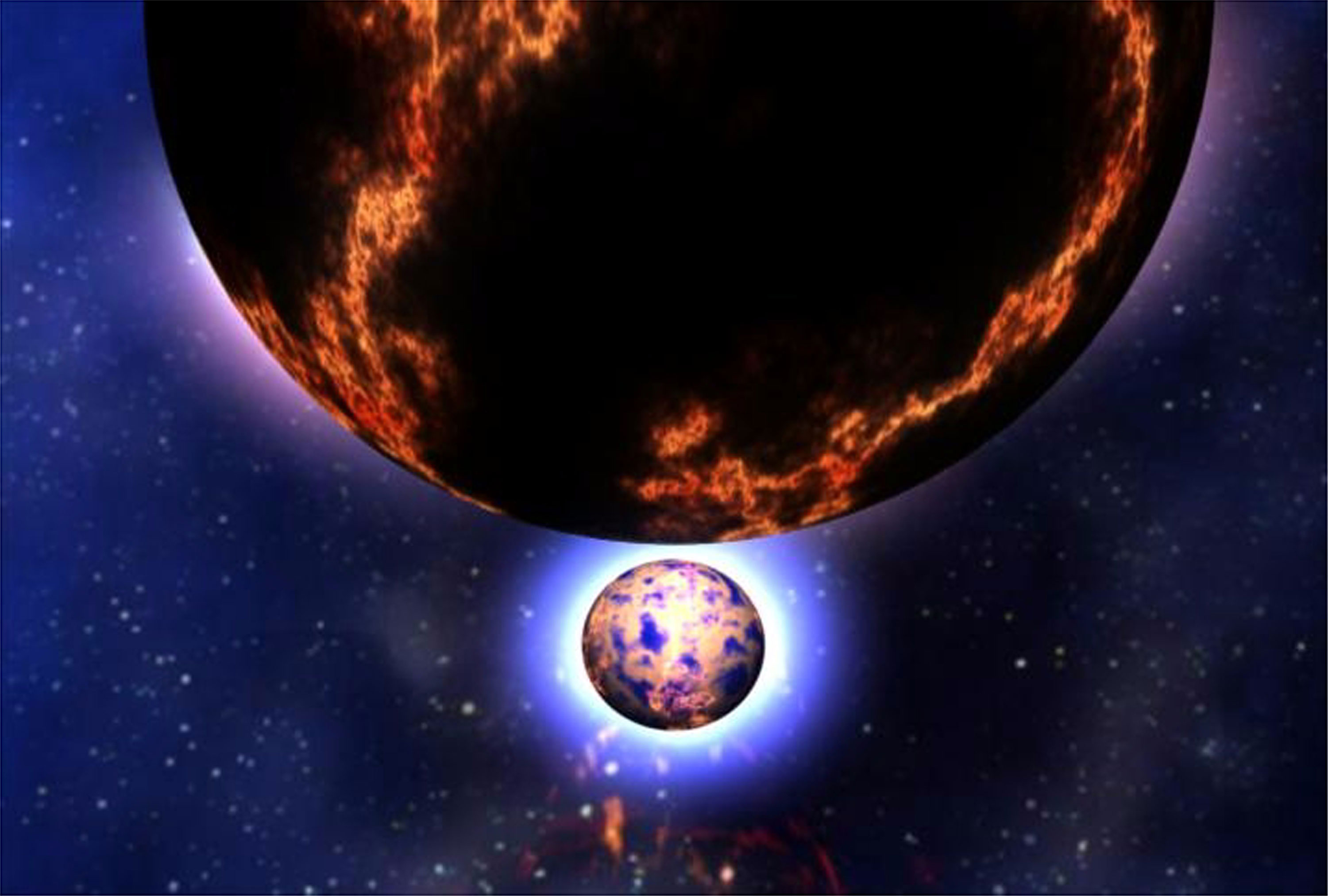
While reading this article I found out that no one knows for sure where gold originated from. Some astronomers have recently suggested that neutron-heavy metals like gold are easily made in rare neutro-rich explosions. Since many other types of precious metals are thought to have come from explosions, it is possible that gold is suvenir from an earlier explosion in our galaxy.
See Explanation.  Clicking on the picture will download
the highest resolution version available.

I learned that a supernova explosion is one of the most powerful of its kind. This explosion occurs if the star is very large and it collapses and releases a lot of energy. After the star collapses the result is usually a rapidly moving neutron star that is observed many years later.
animation of supernova explosion

Friday, September 9, 2011

APOD1.2-Comet Garradd and the Coat Hanger

Last weekend this beautiful comet sweeped across Earth's sky along the milky way. In the picture you see that the comet's tail is pointing southeast. The background of this comet is the stars in the asterism, known as the Coat Hanger. Hard to see from the naked eye but very good for telescopes and binoculars. Comet Garrad has been getting a lot of hype lately and is a very nice comet with a bright head and a stubby but well defined tail. Something I did not know about comets was that they last for so long, in movies they portray comets as just sailing through the night sky, while the article I read said  Comet Garradd would be there from October to March!

Friday, September 2, 2011

APOD 1.1- The Endeavor into the night....AND Mr.Percival.

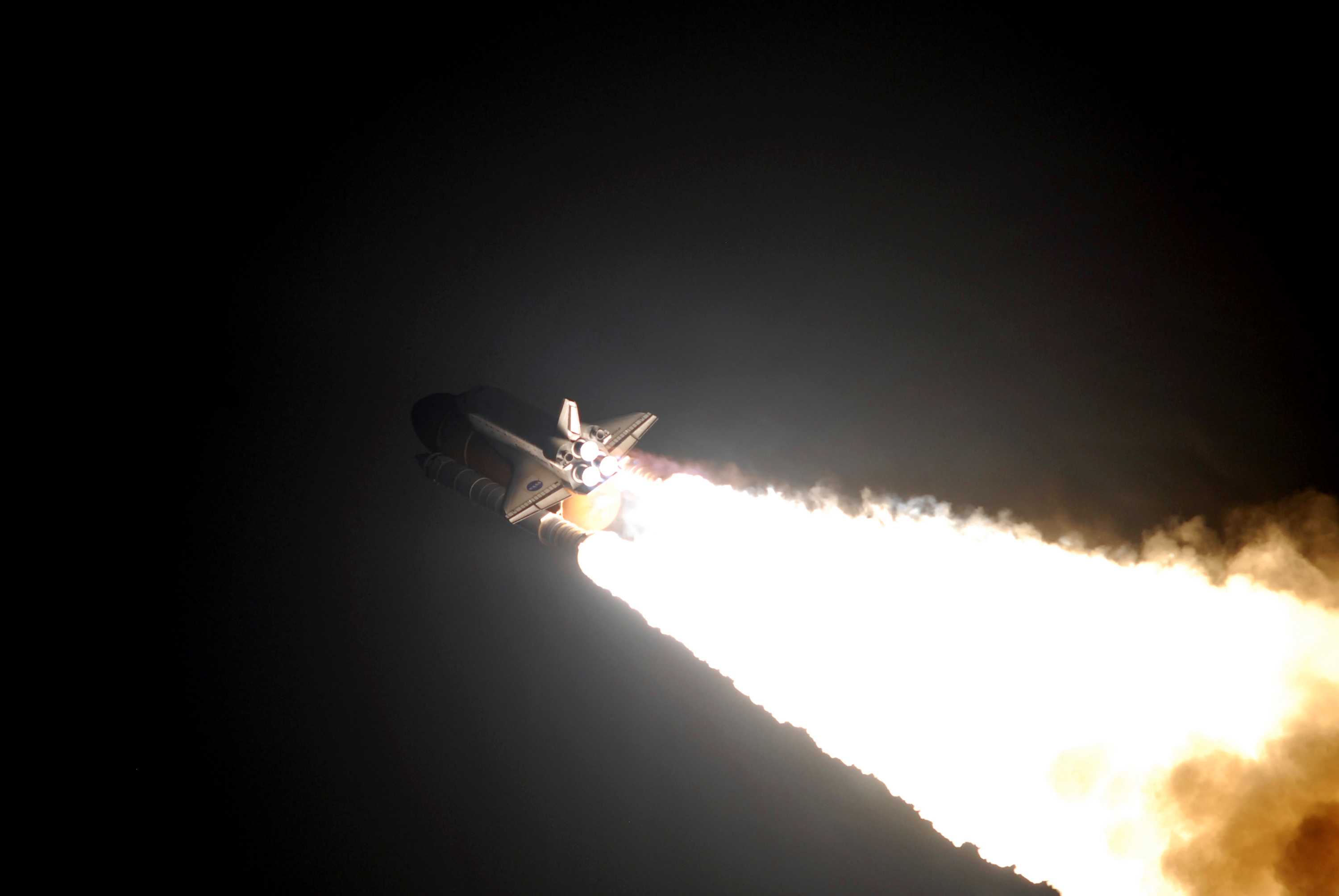
While reading the information on the snapshot, the Endeavor into the night, an interesting fact I found was that when this picture was taken it was the 10th anniversary of the official start of construction of the Space Station. I did not know very much on the Endeavor space shuttle before I read this article but know I know that there were seven astronauts aboard this awesome shuttle. Also while looking further into details of the Endeavor I found out about the perigee moon that is seen in the picture of the article. A perigee moon is when the moon will reach it's full phase within its closest point in its elliptical orbit. Below is an extremely fascinating image of the space shuttle, Endeavor, that was taken from an interesting angle right below after it's takeoff.
See Explanation.  Clicking on the picture will download
 the highest resolution version available.